Driving in Switzerland during winter needs more planning than a normal city trip. Snow, ice, and low temperatures can change road conditions fast. There is no fixed law forcing winter tyres on set dates. However, you must keep your rental car safe and controllable in these conditions.
If you plan to rent a car in Switzerland, check the fitted tyres before you leave the rental location. Tyre condition matters most on mountain roads, near ski areas, or in higher valleys. Our guide covers rules for winter tyres in Switzerland, rental checks, mountain routes, and driving safely.
Driving with unsuitable tyres can create legal and insurance problems after an incident. A fine, licence action, or insurance dispute may follow if poor tyres contributed to danger. Summer tyres provide less grip when snow or ice covers the road. Swiss law does not set a winter tyre season, but your car must remain safe for the road conditions. If conditions become unsafe, stop driving until the road improves or your equipment is suitable.
A common rule is to use winter tyres from October until Easter. Easter falls in March or April, but weather matters more than dates. Snow can arrive earlier in mountain areas and stay later into spring.
Many drivers also use around 7 degrees Celsius as a guide for changing tyres. Lower temperatures reduce the grip of summer tyres, even before heavy snow arrives. Lower cities may stay mild longer, while Alpine valleys, high roads, and ski areas can turn wintry much earlier.
Check forecasts and road conditions before longer winter drives. If snow, ice, or freezing rain is expected, suitable tyres are important. Also review pass conditions before heading higher into the Alps.
Poor tyres can affect more than braking and steering. They can also reduce your control and make winter roads harder to drive safely. When winter driving in Switzerland, choose conditions you can manage safely. If snow is too heavy, stop somewhere safe and reassess your plans.

Not every tyre marked for mixed weather gives the same winter performance. Check the type, tread, and sidewall markings because tyre condition matters greatly on snow and slush.
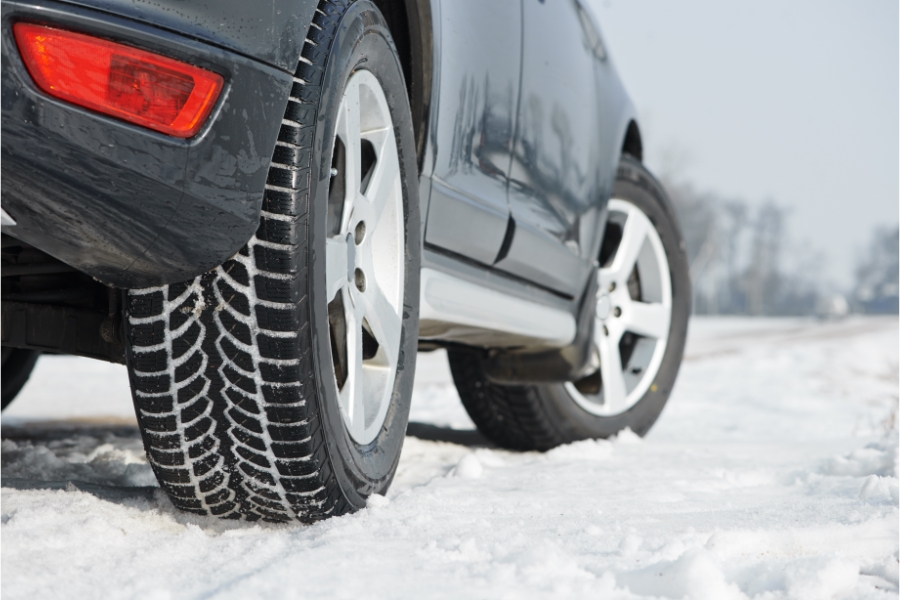
Winter tyres use rubber compounds designed to stay flexible in low temperatures. Their tread also has fine cuts and deeper grooves. These features help the tyre grip snow, slush, and cold, wet surfaces. All-season tyres are designed for mixed weather throughout the year. They can work well during mild winters, but performance varies between products. Deep snow and icy mountain roads may still favour full winter tyres.
Modern winter tyres should carry the Three-Peak Mountain Snowflake symbol on the sidewall. The symbol shows the tyre has passed a standard snow performance test. Older M+S markings alone do not show the same tested winter standard.
Swiss law sets a 1.6-millimetre minimum tread depth for tyres. However, winter grip drops well before a tyre reaches that limit. During winter, 4 millimetres is a safer recommended minimum. If your tyres look badly worn, ask the rental staff to inspect them. Do not accept serious damage simply because the tread meets the legal minimum.
Before leaving, confirm the equipment included with your booking and inspect the car yourself. Preparing for the winter starts at pick-up, especially when your route includes snow, steep roads, or ski areas.
Car rental companies use different winter equipment policies. Some winter bookings include suitable tyres, while others offer them as an optional extra. Read your booking details before paying and check again before travel.
Rental policies for tyres in Switzerland can also vary between car rental companies. Some may fit winter tyres during a set period. Others may base availability or charges on the location, car type, and booking terms.
If you want to arrange your car early, book a car rental with Final Rentals before your trip. Your booking usually includes unlimited mileage and insurance, including Collision Damage Waiver, Theft Waiver, and Third Party Liability. You can also choose compact cars, SUVs, premium SUVs, and seven-seat options based on your route and luggage.
Walk around the car and look at all four tyres. Check the sidewall markings, tread, and general condition. Make sure each tyre looks suitable for the expected winter conditions.
Use a tread gauge if you have one, and check if there are cuts, bulges, cracks, or nails. Report anything unusual before you leave and ask staff to record the issue. Check whether wear looks similar across all four tyres. Major differences can reduce predictable grip on slippery roads.
Winter tyres in Switzerland improve grip, but some mountain roads may require snow chains. A blue chain sign means chains are mandatory on that stretch. The rule can also apply to four-wheel-drive cars unless a sign gives an exemption.
Ask whether snow chains are included with your rental or available as an extra. Make sure they fit the tyre size before you leave. Some mountain roads require snow chains when the sign is displayed, even if your car already has winter tyres. Textile traction aids may not meet the same rule, so check the road signs and rental instructions before driving into snowy areas.
Keep your speed at or below 50 kilometres per hour when chains are fitted. Remove them once you reach clear roads where they are no longer needed. Check their fit again after driving a short distance.
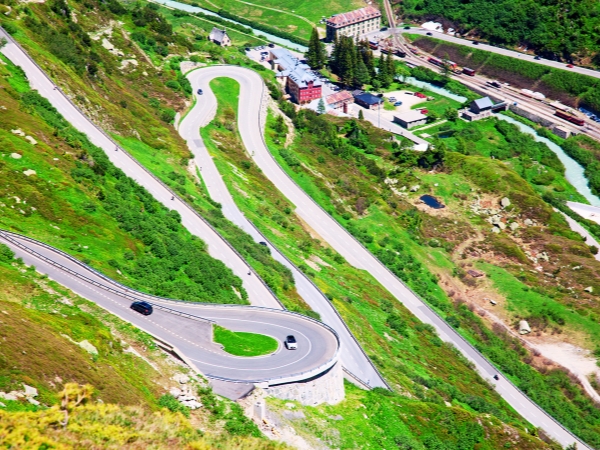
Choose the car around your route, passengers, luggage, and expected snow. An SUV can provide more ground clearance and more storage for winter gear. Four-wheel drive can also help when starting on slippery slopes. Main motorways and many valley roads stay open through winter. High Alpine passes can close because of snow and seasonal conditions. Check road status before any Swiss Alps road trip.
If a mountain pass is closed, you may need to take another route or use a car shuttle train. Roads near ski resorts can also become steeper as you climb higher. After heavy snow, some of these roads may require snow chains. It is also worth keeping a few winter essentials in the car. An ice scraper, warm clothing, water, and snacks can be useful during delays. De-icer can also help when the car has been parked outside overnight..
Winter tyres in Switzerland are an important part of safer cold-weather driving, especially when snow, ice, and low temperatures affect grip. Before setting off, check the tread, weather, road conditions, and whether snow chains may be needed. Good winter equipment helps you stay prepared, but your speed, braking, route planning, and driving style still matter throughout the journey, especially on mountain roads and during changing winter conditions.
Rent a car in Switzerland with Final Rentals to get a 30-minute grace period for pick-ups and returns. You can also choose excess reduction if you want lower damage liability during your rental period. Book and manage your car rental at any time by downloading the Final Rentals app on Google Play and the App Store.
No. Switzerland has no blanket law requiring winter tyres on fixed dates. You must still maintain full control in snow and ice. Using summer tyres in unsafe winter conditions can lead to a fine, licence action, or insurance problems after an incident. To be safe, use winter tyres when snow, ice, or freezing conditions affect your route.
Swiss law sets a minimum tread depth of 1.6 millimetres for tyres, including winter tyres. For winter, 4 millimetres is safer and the recommended minimum. Modern winter tyres should carry the Three-Peak Mountain Snowflake symbol. There is no fixed national winter-tyre season, but your tyres must keep the car roadworthy and controllable for the conditions.
Confirm that winter tyres are fitted and check whether snow chains are included or optional. Inspect the tread, sidewalls, and visible damage before leaving. Choose a car type that fits your route, passengers, and luggage. For mountain travel, check pass closures and chain signs. Keep an ice scraper, warm clothing, water, and other basic winter supplies in the car.